For adult children
Helping Aging Parents in Florida From Out of State
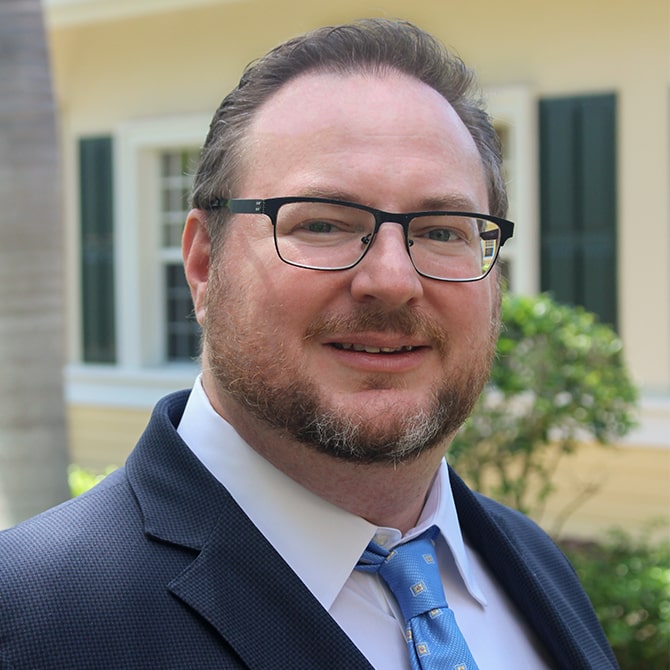
By Brandon Arkin, elder law attorney, Solkoff Legal, P.A.

By Brandon Arkin, elder law attorney, Solkoff Legal, P.A.
Updated November 2026
Why distance makes it harder
Maybe your mom retired to Boca Raton years ago. Maybe your dad is a snowbird, meaning he spends the winter in Florida and the summer up north. Either way, you hear about problems late, often from a neighbor or a hospital social worker.
Distance creates three gaps. You don't see small changes, like unopened mail or a dented car. Banks and doctors may not talk to you. And when a crisis hits, you have to make decisions from a phone in another time zone.
The good news: a few calls and signed documents can close most of these gaps, ideally before an emergency.
If you're just starting, My parent needs help: the first 30 days covers the basics. This article focuses on doing it from far away.
Build a team on the ground
You need people who can be there when you can't.
The Aging and Disability Resource Center (ADRC) is the free, state-designated front door for elder services in each region of Florida. Each of the state's 11 Area Agencies on Aging serves as its region's ADRC (Florida Department of Elder Affairs). To find your parent's ADRC, call the Elder Helpline at 1-800-963-5337 (Elder Affairs). In Palm Beach County, the helpline is 1-866-684-5885 (AAA of Palm Beach/Treasure Coast).
The ADRC can screen your parent for state programs and for the Medicaid long-term care waitlist. It can also point you to local services like meals, adult day care and caregiver support.
A geriatric care manager, sometimes called an aging life care manager, is a professional, often a nurse or social worker, whom families hire privately to assess a parent, arrange care and check in. For a long-distance family, a care manager can act as your eyes and ears. Ask about credentials, fees and how often they'll report to you.
Round out the team with a trusted neighbor, your parent's doctor and a backup person with a key.
Getting access to money matters
The cleanest tool is a durable power of attorney (POA). It's a document in which your parent (the "principal") names someone (the "agent") to handle finances. In Florida, it must be signed by your parent and two witnesses, and notarized (Fla. Stat. 709.2105).
Banks often move slowly with a POA. Florida law presumes four business days is a reasonable time for a bank or broker to accept or reject a POA for banking or investment transactions, when the POA expressly grants those powers. A bank also can't demand its own form instead (Fla. Stat. 709.2120). Call the branch first and ask what it needs.
Two common shortcuts have downsides:
- Joint accounts. Adding your name may make the money legally yours too. That can expose it to your creditors and change who inherits.
- Convenience accounts. Florida allows a "convenience account", where your parent stays the only owner and you're named as an agent who can make deposits and write checks (Fla. Stat. 655.80). It's narrower than a POA but may fit simple bill paying.
Social Security is separate. Social Security doesn't accept a POA for managing benefits. If your parent can't manage benefits, you'd apply to become a representative payee, a person Social Security appoints to receive and manage the benefits (SSA).
If you're already the agent, see You're mom's agent under a power of attorney. Now what?.
Getting doctors to talk to you
HIPAA is the federal privacy law for health information. People often think it bars doctors from talking to family. It doesn't, quite. Doctors may share information relevant to your role in your parent's care if your parent agrees or doesn't object. When your parent can't speak for themselves, providers may use professional judgment (HHS). In practice, a busy office may still say no over the phone.
Two documents help:
- A health care surrogate designation, which names someone to make medical decisions and receive health information. In Florida, it's signed in front of two adult witnesses. The surrogate can't be a witness, and at least one witness can't be a spouse or blood relative (Fla. Stat. 765.202). Under federal rules, a person with legal authority to make health decisions is generally treated like the patient for privacy purposes (HHS).
- A living will, which states wishes about life-prolonging care.
Keep scanned copies on your phone. Ask each doctor's office to put the surrogate form in the chart. The five documents every Florida adult needs explains each one.
When your parent lives in two states
Snowbird parents add a twist. Benefits like Florida Medicaid generally require Florida residency, and a home's tax treatment can depend on where your parent is legally domiciled, meaning the place they call their permanent home. Florida generally honors documents validly signed in another state, but an unfamiliar form can still slow a bank or hospital down.
A daughter in Atlanta might find that her dad's New York POA is valid but that a Florida bank asks more questions about it. Having Florida documents reviewed, or signed fresh, often saves time.
If your parent is starting to need more care, talk about which state will be "home" before a crisis forces the answer. Retired to Florida? Update your plan covers this.
Signs you need more help
Watch for these during calls and visits:
- Missed bills, late notices, or new "friends" asking for money.
- Weight loss, an empty fridge or spoiled food.
- Missed medications or confusion about doctors.
- Falls, bruises or car damage.
- A parent who suddenly stops answering the phone.
Scams often target older people living alone, and long-distance families notice late. If you suspect abuse, neglect or exploitation, call the Florida Abuse Hotline at 1-800-962-2873.
If memory is changing, read Planning after a dementia diagnosis. Signing documents requires capacity, so acting early matters. If your parent can no longer sign, a guardianship, a court process to appoint a decision-maker, may become the only option.
When to call an elder law attorney
Consider talking with an elder law attorney if your parent has no POA or health care surrogate, if a bank rejected a POA, if a sibling and you disagree, if your parent may need nursing home care, or if you think someone is taking advantage. An attorney can review existing documents, explain Florida rules and help your parent sign new ones while they still can.
Your parent is the client. The attorney will usually want to meet with your parent, sometimes privately, to confirm the plan reflects their wishes. Video meetings may help when you can't be there. Before you call, the First Conversation guide and the family quiz can help you sort out where things stand.
Make-every-visit-count checklist
Print this before your next trip. You won't finish it in one visit, and that's fine.
- Before you go: schedule a doctor visit you can attend, and a meeting with the care manager or ADRC if you have one.
- Before you go: ask your parent which papers they'd like help finding.
- At the house: check the fridge, medications, mail and smoke detectors.
- At the house: look for tripping hazards, poor lighting and a bathroom without grab bars.
- Paperwork: find the POA, health care surrogate, living will, and will or trust. Note the dates signed.
- Paperwork: photograph insurance cards, Medicare card and the list of medications.
- Money: list banks, pensions and recurring bills. Ask if your parent wants you to have online access.
- People: get phone numbers for a neighbor, the primary doctor and the pharmacy. Introduce yourself in person.
- Talk: ask what your parent wants if they can't live alone. Write it down.
- Before you leave: set a weekly call time and agree on who gets called first in an emergency.
Can I manage my parent's Florida bank account from another state?
Often yes, if your parent gives you legal authority. A Florida durable power of attorney is the usual tool, and it can be used from anywhere. Florida law presumes four business days is a reasonable time for a bank to accept or reject a POA for banking transactions, when the document expressly grants banking powers. Some banks also allow a convenience account, which lets you pay bills without becoming an owner. Adding yourself as a joint owner is simpler but may cause problems with creditors and inheritance. Social Security benefits need a separate step: applying to be a representative payee.
Why won't my mom's doctor talk to me?
HIPAA allows doctors to share relevant information with family involved in care when the patient agrees or doesn't object. Many offices still play it safe, especially over the phone with someone they haven't met. A Florida health care surrogate designation usually solves the problem. Ask the office to put it in your mom's chart. If your mom has lost capacity and has no surrogate, Florida law lists family members who may act as a proxy, but the process can be slower. Getting documents signed early is usually easier.
Do I need a care manager if I live far away?
Not always, but many long-distance families find one helpful. A geriatric care manager can assess your parent's needs, find and supervise home care, attend appointments and report back to you. Fees are usually private pay and vary. If cost is a concern, start with the ADRC through the Elder Helpline at 1-800-963-5337. It's free and can screen your parent for state and Medicaid programs. Some families use a care manager for an initial assessment and then rely on a neighbor and regular calls. It depends on how much help your parent needs.
If your family is facing one of these questions, you can reach Brandon Arkin at Solkoff Legal, P.A. at (561) 733-4242.
Talk through the next step
Bring your questions, a list of accounts and any papers a hospital, nursing home or Medicaid office has sent you. Call the Delray Beach office or request a consultation, and I can look at where things stand and what may come next. A phone call or an email does not by itself create an attorney-client relationship.
Solkoff Legal, P.A. · (561) 733-4242