For administrators and business office managers
Medicaid-Pending Admissions in Florida Nursing Homes and ALFs: A Business Office Guide
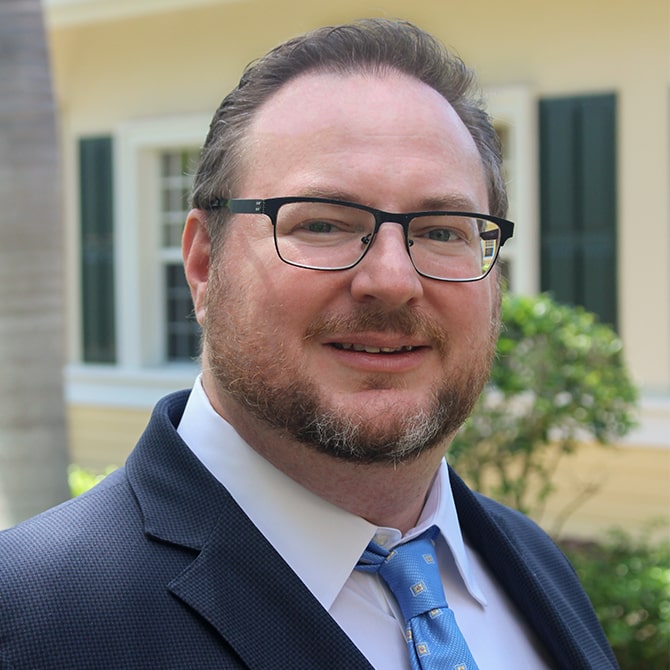
By Brandon Arkin, elder law attorney, Solkoff Legal, P.A.

By Brandon Arkin, elder law attorney, Solkoff Legal, P.A.
Updated November 2026
Medicaid-pending admissions
A Medicaid-pending admission is a nursing home admission where the resident has applied, or will apply, for the Institutional Care Program (ICP), Florida's Medicaid category for nursing facility care, and approval hasn't come yet. Once approved, the resident's Statewide Medicaid Managed Care Long-Term Care (SMMC LTC) plan pays the facility.
Three facts drive the financial risk:
- Since February 1, 2019, Florida generally offers no retroactive coverage for adults 21 and older. Eligibility usually begins the first day of the month DCF receives the application (AHCA).
- Federal rules allow up to 45 days for a decision, or 90 days when disability must be decided (42 CFR 435.912).
- If income is above $2,982 a month, a Qualified Income Trust must be funded in each month for which coverage is sought (DCF Appendix A-9).
The 2026 ICP asset limit is $2,000 for a single applicant. A community spouse may keep up to $162,660 (CSRA) and may receive an income allowance between $2,705 and $4,067 a month (DCF Appendix A-9).
The ban on third-party guarantees
Under 42 CFR 483.15(a), a certified facility may not:
- Require residents to waive their rights to Medicare or Medicaid.
- Require an oral or written assurance that the resident isn't eligible for, or won't apply for, Medicare or Medicaid.
- Request or require a third-party guarantee of payment as a condition of admission, expedited admission or continued stay.
- Charge or accept extra payment from a Medicaid-eligible resident as a precondition of admission.
The facility may require a representative with legal access to the resident's funds to sign to pay from those funds, without personal liability (Cornell LII, 42 CFR 483.15). "Responsible party" language that reads like a personal guarantee invites disputes.
Florida adds its own protection. A resident may not be transferred or discharged solely because the payment source changes, and an admission agreement waiving that right is void (Fla. Stat. 400.022(1)(p)). Residents also have the right to be told about charges (400.022(1)(i)).
Arbitration agreements under 483.70(m)
Pre-dispute arbitration agreements are allowed, but 42 CFR 483.70(m) sets conditions:
- Signing may not be a condition of admission or continued care, and the agreement must say so explicitly.
- It must be explained in a form and language the resident or representative understands, and they must acknowledge that understanding.
- It must provide for a neutral arbitrator and a venue convenient to both parties.
- The resident has 30 calendar days after signing to rescind.
- It may not discourage contact with federal, state or local officials, including the Long-Term Care Ombudsman.
- The facility keeps signed agreements and arbitration decisions for 5 years.
Present it as a separate document and log the rescission deadline.
Patient responsibility and the $160 PNA
Patient responsibility is the amount of the resident's own income that DCF determines must be paid to the facility each month. It is generally gross income minus the $160 personal needs allowance (PNA), minus any community spouse or dependent allowance, minus allowable uncovered medical expenses such as health insurance premiums (DCF Appendix A-9). The PNA is the amount the resident keeps for personal items.
Income counts whether it lands in the resident's account or a QIT, and a withheld Medicare Part B premium still counts as gross income.
Hypothetical: a single resident receives $2,400 a month in gross income and pays a $150 monthly supplemental premium. Patient responsibility would be about $2,400 − $160 − $150 \= $2,090. Use the figure in DCF's notice and update the ledger when it changes.
Agree early with the representative on who pays patient responsibility and from which account.
QIT deposits and the income cap
The ICP income cap for 2026 is $2,982 a month in gross income. Above that figure, the applicant generally needs a Qualified Income Trust (QIT), a trust with its own bank account that receives income above the cap. DCF's rules are strict (DCF QIT sheet):
- Income must be deposited in the month it is received. A missed or short deposit can make that month ineligible for long-term care payment.
- Deposits can't be made for a past or future month.
- The trust holds income only, never assets.
- At death, the balance goes to the State up to what Medicaid paid. Check the facility's refund handling for the month of death.
A missed deposit can mean an unpaid month with no Medicaid payer. Confirm the trustee's name, the account and the monthly deposit date at intake, and ask for proof of deposit each month during the pending period.
When an application is denied
The applicant, or an authorized representative, may request a Medicaid fair hearing within 90 days of the DCF or CARES notice. Requests go to the DCF Office of Appeal Hearings, 2415 North Monroe Street, Suite 400-I, Tallahassee, FL 32303-4190, phone (850) 488-1429, or by email to appeal.hearings@myflfamilies.com (AHCA). The notice of hearing is generally sent at least 14 days before the hearing, and evidence is due 7 days before (DCF Appeal Hearings FAQ).
Many denials are for missing verifications. A new application may be faster than a hearing, but may also move the eligibility start date. Which path is better depends on the facts, and that choice is a good point to involve an elder law attorney.
ALFs: SMMC LTC waiver or OSS
In an assisted living facility, Medicaid generally pays for services, not room and board, and only through an SMMC LTC plan. That usually requires release from the statewide waitlist under Fla. Stat. 409.979. An exception allows priority enrollment for Adult Protective Services high-risk referrals temporarily placed in an ALF. An "ALF Medicaid pending" admission is often a long private-pay stay.
Optional State Supplementation (OSS) is a separate state cash program under Fla. Stat. 409.212 that helps eligible low-income residents pay an ALF or adult family care home. For OSS-enrolled ALFs, DCF's January 2026 figures for an individual are an income standard of $1,072.40, a provider rate of $1,018.40, a $160 PNA, a maximum OSS payment of $184.40 and a $2,000 asset limit (DCF Appendix A-12). Applications go through MyACCESS. OSS facilities are listed in the Florida Health Finder ALF tool.
Bed-hold and discharge rules
Bed-hold: in a Florida nursing home, a private-pay resident may hold a bed for up to 30 days per hospitalization if the facility is paid, and a Medicaid resident for up to 15 days while Medicaid pays (Fla. Stat. 400.022(1)(u)).
Discharge reasons are limited by 42 CFR 483.15(c). They include nonpayment after reasonable notice, which can include failure to submit paperwork for third-party payment such as Medicaid.
Florida procedure, Fla. Stat. 400.0255:
- Notice: generally 30 days in advance on the standard AHCA form, and a copy goes to the ombudsman council within 5 business days. Shorter notice is allowed only for physician-documented medical reasons or danger to others.
- Hearing: the resident may request a DCF hearing within 90 days of notice. A request within 10 days stays the discharge pending a decision.
- Readmission: if the facility improperly refuses readmission after a hospital stay, the resident is readmitted to the first available bed and any bed-hold payment is refunded.
For ALFs, Fla. Stat. 429.28(1)(k) generally requires 45 days' written notice of relocation or termination, with reasons and the Ombudsman's toll-free number (1-888-831-0404), except in emergencies or harmful conduct.
How I work with facilities
I represent residents and families and share information only with the client's consent. Records are requested only with the client's direction.
Solkoff Legal, P.A. does not pay referral fees or give anything of value for a recommendation. Florida Bar Rule 4-7.17(b) generally prohibits a lawyer from giving anything of value to a person for recommending the lawyer's services (Rules Regulating The Florida Bar).
Business office intake checklist
A starting list to adapt with your own counsel and corporate policies.
- Payer status on admission: Medicare days remaining, private pay, ICP filed or not, SMMC LTC plan name if enrolled.
- Application date and DCF case number. If not yet filed, a target filing date before month-end.
- Gross monthly income by source. If over $2,982, the QIT trustee, account and monthly deposit date, plus a copy of the trust sent to DCF.
- Representative's authority: copy of the POA or guardianship letters, and health care surrogate designation.
- Admission agreement reviewed so the representative signs only to pay from the resident's funds, with no personal guarantee.
- Arbitration agreement offered separately, with the 30-day rescission date logged.
- AHCA Form 5000-3008 sent to the physician and the CARES status noted.
- A named staff contact tracking DCF verification requests.
- Patient responsibility amount from the DCF notice, the start month and the payment method.
- For ALFs: waitlist screening status, any OSS application and whether the facility is OSS-enrolled.
- Denial protocol: date of notice, 90-day hearing deadline and who tells the family.
- Bed-hold policy and discharge notice forms reviewed.
Can a nursing home require a family member to guarantee payment?
No, not as a condition of admission, expedited admission or continued stay at a Medicare- or Medicaid-certified facility. 42 CFR 483.15(a) bars requesting or requiring a third-party guarantee. The facility may ask a representative who has legal access to the resident's income or resources to sign a contract to pay from those funds, without personal liability. Problems tend to arise when "responsible party" wording looks like a guarantee or when the representative misuses the resident's funds, which is a separate issue. Florida also voids any admission waiver of the right not to be discharged solely because the payment source changes.
How long does a resident have to appeal a Medicaid denial in Florida?
Generally 90 days from the date of the DCF or CARES notice. The request goes to the DCF Office of Appeal Hearings by mail, phone at (850) 488-1429 or email at appeal.hearings@myflfamilies.com. The notice of hearing is usually sent at least 14 days before the hearing, and evidence is due 7 days before it. A separate deadline applies to nursing home discharge appeals under Fla. Stat. 400.0255: 90 days to request a hearing, and a request within 10 days stays the discharge. Because a new application can change the start date, the choice between appealing and reapplying depends on the facts.
Does Medicaid pay for assisted living in Florida?
Partly, and usually not right away. Through an SMMC LTC plan, Medicaid may pay for assisted living services, but generally not room and board. Enrollment for home and community-based services, including ALF, usually requires release from the statewide waitlist, which is based on a priority score rather than time on the list. Optional State Supplementation is a separate state program that can help eligible low-income residents in OSS-enrolled facilities. DCF's January 2026 figures show a provider rate of $1,018.40 and a maximum OSS payment of $184.40 for an individual. Eligibility and amounts depend on income and the facility.
If a client or patient is facing one of these questions, Brandon Arkin at Solkoff Legal, P.A. can be reached at (561) 733-4242.
Talk through the next step
Bring your questions, a list of accounts and any papers a hospital, nursing home or Medicaid office has sent you. Call the Delray Beach office or request a consultation, and I can look at where things stand and what may come next. A phone call or an email does not by itself create an attorney-client relationship.
Solkoff Legal, P.A. · (561) 733-4242