Florida Medicaid long-term care planning is the work of understanding how the state may help pay for ongoing care when someone needs help with daily life for months or years, and then making decisions based on the actual rules instead of rumors. Long-term care means help with bathing, dressing, eating, moving safely or supervision because of memory loss, delivered in a nursing home, an assisted living facility or the person’s own home. Palm Beach County families usually meet this question at a hard moment: after a hospital stay, when a parent can no longer live safely alone, or when one spouse is wearing out caring for the other.
Long-term care Medicaid is not Medicare. Medicare is health insurance. After a medically necessary inpatient hospital stay of at least three days in a row, Medicare may cover up to 100 days of skilled nursing facility care in a benefit period, and in 2026 the patient pays a daily coinsurance of $217 for days 21 through 100 (Medicare.gov). Time spent "under observation" does not count toward those three days.
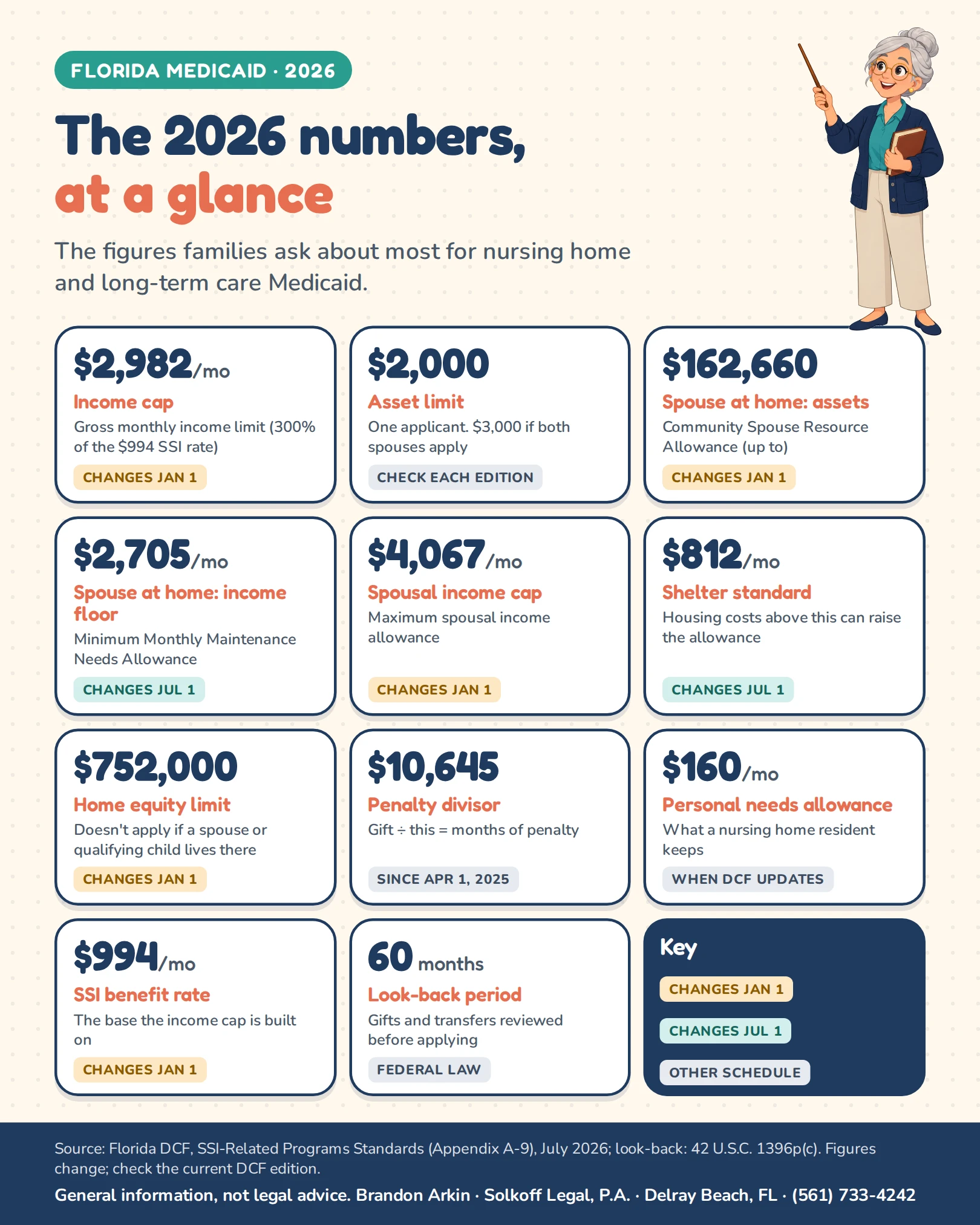
Medicare does not pay for custodial care: the long, ordinary months of help with daily living after rehab ends. That is where families start asking who pays the monthly nursing home bill. For a sense of scale, the average monthly nursing home cost Florida uses to figure transfer penalties is $10,645 in the current DCF standards (Florida DCF, Appendix A-9).
It is also not the same thing as the Medicaid card someone may already use for doctor visits. The programs that pay for long-term care have their own rules about income, countable assets and the level of care a person needs. Having one kind of Medicaid, or having very little in a checking account, does not by itself answer the long-term care question.
Florida families usually hear about two main paths:
- Institutional Care Program (ICP): Medicaid coverage for a person who lives in a Medicaid-certified nursing home and meets the medical and financial rules.
- Statewide Medicaid Managed Care Long-Term Care (SMMC LTC): a program that can help pay for care at home or in assisted living. To enroll, a person must be 65 or older (or 18 or older with a qualifying disability) and be found by the state's CARES unit to need nursing-facility level care. Enrollment depends on available funding. The Department of Elder Affairs keeps a statewide waitlist (the pre-enrollment list), and people are released from it by a priority score from a frailty screening, not simply by who applied first (Fla. Stat. 409.979).
Program names and procedures change, and a waiver is not an open door. A consultation matches the person's actual care setting to a program that exists today, not to an old handout.
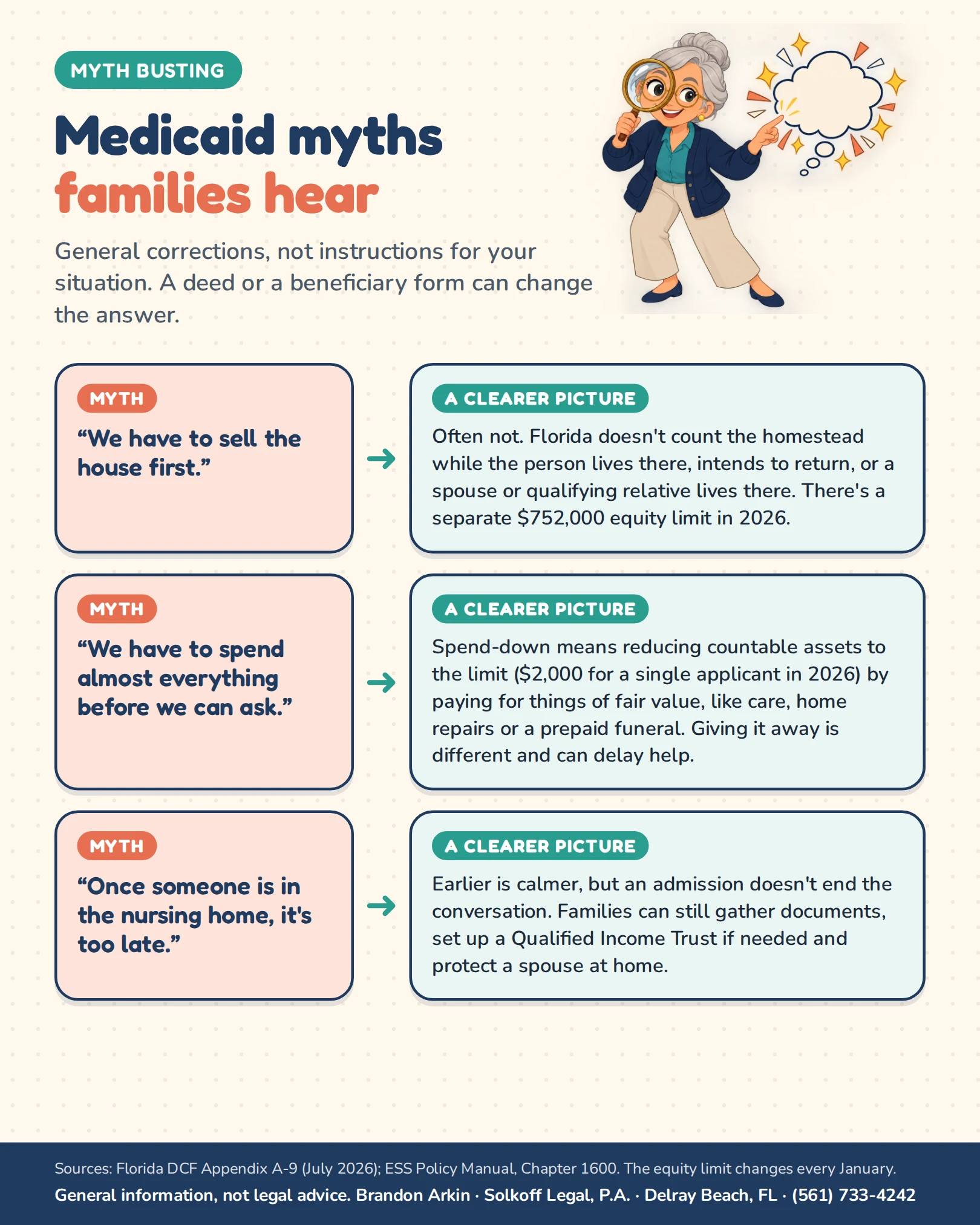
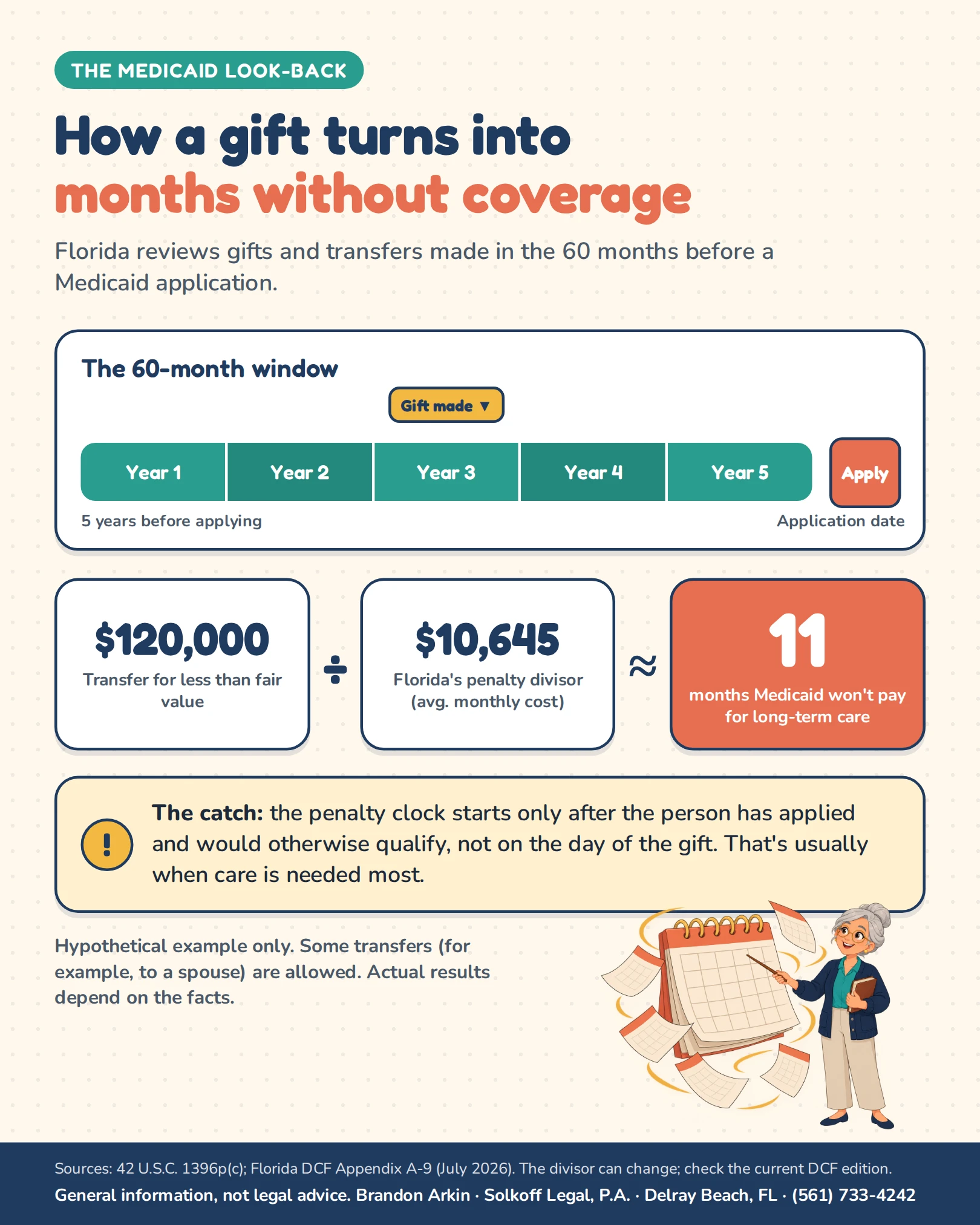
“Planning” means looking at those rules before money moves, while there is still a choice about what to do. Applying is a later step, filed through ACCESS Florida with the Department of Children and Families (DCF) once the care and the facts support it. Planning is not a promise that a person will qualify. It is not a calculator, and it is not a way to hide assets. Florida Medicaid reviews gifts and transfers, and a transfer made so that someone looks eligible can delay coverage for months. Lawful planning works with the rules: knowing what counts, what doesn’t, and what the law itself allows.