
A guide for families · printable
The first conversation
Ticks stay on this page until you leave or refresh. They are not saved and not sent anywhere. To keep a file, choose Save as PDF in the print dialog.
How to open the topic gently
The first talk is about their wishes. It is not a meeting to retitle the house, move money or promise what a benefit program will do. Those steps can come later, with advice.
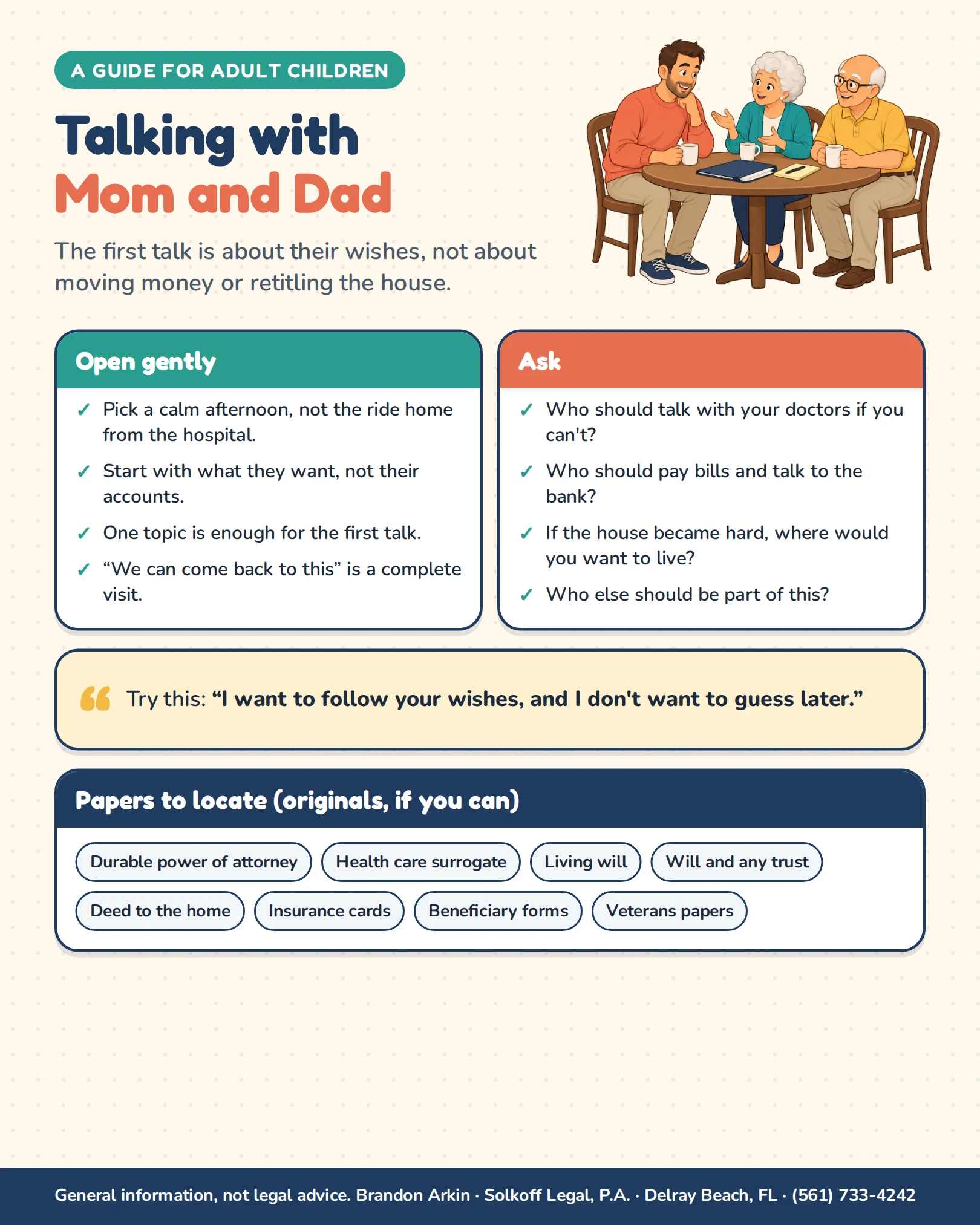
- Pick a calm afternoon, not the ride home from a hospital, if you can.
- Start with what they want, not with their accounts.
- Try one sentence: “I want to follow your wishes, and I do not want to guess later.”
- One topic is enough for the first talk. Money can wait until they are comfortable.
- Offer to write it down together, and to stop if they want to stop.
- If they shut the door, leave it unlocked. “We can come back to this” is a complete visit.
Questions to ask
Tick a question after you have actually asked it. The tick is a reminder for this visit to the page. It is not a record this office keeps.
Documents to locate
Look for the original, not only a photo on a phone. Some institutions want to see a signed original, especially of a power of attorney. You do not need every page before the first call. Knowing what exists is the useful part.
What each of those documents does is explained on the estate planning page. How the house and care costs fit together is on the Medicaid overview.
Warning signs that make it more urgent
None of these signs decides a legal question. They are reasons to have the conversation soon, while your parent can still take part and sign documents, instead of waiting for a calmer month that may not come.
- A fall, especially more than one.
- A new diagnosis, or a doctor using words the family does not understand yet.
- A hospital stay, rehab, or a discharge planner asking where someone will go next.
- Bills, taxes, or insurance notices that are not getting paid.
- A new friend, caller or online message asking for money, gift cards, wire transfers or account numbers.
Next steps
- Write down what they said, in their words, and where you found each paper.
- If you want a private sense of which topics are open, use the family quiz. Those answers stay on the device too.
- Call Solkoff Legal, P.A. at (561) 733-4242, or use the contact page. A call or an email does not by itself create an attorney-client relationship. Bring the questions. You do not need a finished plan.
Educational only. This checklist is not legal advice, not a form to sign and not a promise about benefits or about what any document will do.