For physicians, PAs and APRNs
Capacity letters for legal documents in Florida: what physicians should know
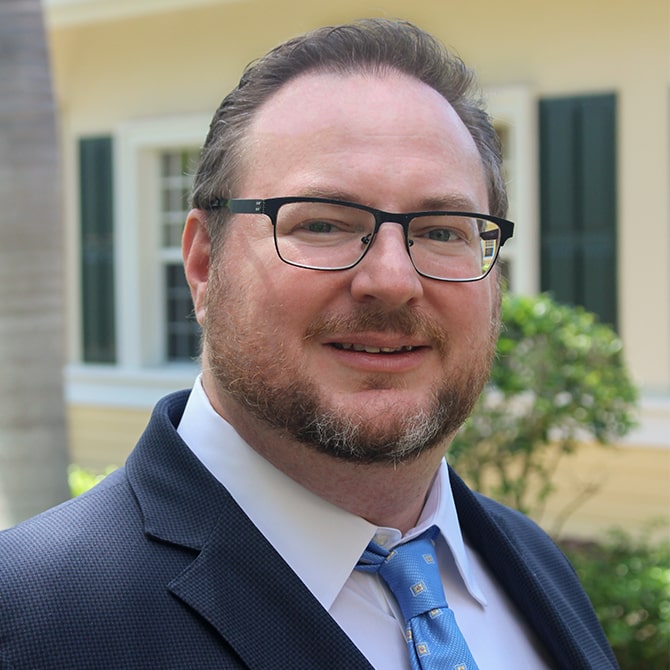
By Brandon Arkin, elder law attorney, Solkoff Legal, P.A.

By Brandon Arkin, elder law attorney, Solkoff Legal, P.A.
Updated November 5, 2026
Capacity is task-specific, not a diagnosis
Lawyers ask whether a patient had capacity for a particular act at a particular time, and different documents use different tests.
- Wills and revocable trusts. Florida requires a "sound mind" to make a will (s. 732.501), and the same capacity applies to creating or amending a revocable trust (s. 736.0601). Courts describe testamentary capacity as the ability to understand, in a general way, the nature and extent of one's property, one's relationship to the people who would naturally inherit, and the practical effect of the document (The Florida Bar Journal). Capacity is presumed, and the question is the patient's state at the moment of signing.
- Contracts, deeds, gifts and powers of attorney. These are generally measured by whether the person could understand the nature and effect of that specific transaction. In practice this is often a more demanding question than testamentary capacity, especially for complex financial authority.
So a patient with mild cognitive impairment may still sign a simple will and a surrogate designation, yet not grasp a complex trust or a large gift. A MoCA score helps, but what the patient actually understood matters more to a court.
Undue influence red flags
Undue influence is a separate question from capacity. A patient can have full capacity and still be pressured. In Florida, when a substantial beneficiary who had a confidential relationship with the person actively procured the document, a presumption of undue influence arises, and under s. 733.107(2) that presumption shifts the burden of proof. Courts look at the factors from In re Estate of Carpenter, 253 So. 2d 697 (Fla. 1971), which include whether the beneficiary:
- was present when the document was signed, or when the person first talked about changing it;
- recommended the lawyer or gave the lawyer the instructions;
- knew the contents before signing;
- found the witnesses; or
- kept the original afterwards.
In the exam room, watch for a new companion who answers every question, a patient who can't be seen alone, sudden isolation from long-time family, or fear of the person who brings them. Neutral charting of what you observed is often more helpful later than any conclusion. Suspected exploitation of a vulnerable adult is reportable under s. 415.1034, whatever the legal planning.
Durable powers of attorney: no "springing" after October 1, 2011
Families often ask a physician to "certify incapacity so the power of attorney kicks in." For most Florida documents, that letter does nothing. Under s. 709.2108, a power of attorney is exercisable when it is signed. A power of attorney signed on or after October 1, 2011 that is conditioned on a future event, including incapacity, is generally ineffective.
The exception is an older document. A power of attorney conditioned on incapacity and signed before October 1, 2011 becomes exercisable when the agent delivers an affidavit from the principal's primary physician (licensed under chapter 458 or 459) stating that the principal lacks the capacity to manage property.
Two more points:
- A durable power of attorney must say it survives incapacity (s. 709.2104), and it must be signed with two witnesses and a notary (s. 709.2105).
- The patient must have capacity when signing. Once capacity is lost, a new power of attorney is usually no longer an option, and guardianship may be the remaining route. This is why the early-dementia window matters.
When a health care surrogate's authority starts
Under s. 765.204, a patient is presumed capable. If capacity is in question, the patient's primary or attending physician evaluates the patient and, if the physician concludes the patient lacks capacity, enters that evaluation in the medical record. If the evaluating physician is unsure, a second physician must also evaluate, and the facility records both. The facility then notifies the surrogate in writing that their authority has started. Authority ends when a physician determines the patient has regained capacity.
"Incapacity" here means the patient is physically or mentally unable to communicate a willful and knowing health care decision (s. 765.101). Some designations give the surrogate authority immediately, so check the document first. The statute assigns this to a physician, so PAs and APRNs should check facility policy.
Living wills, DNROs and POLST in Florida
- Living will. It must be signed with two witnesses, at least one of whom is neither a spouse nor a blood relative, and once you are told it exists it goes into the record (s. 765.302). Before it controls, the primary physician and at least one consulting physician must separately examine the patient to confirm a terminal condition, end-stage condition or persistent vegetative state (s. 765.306).
- DNRO. Outside the hospital, EMS may withhold resuscitation under s. 401.45 when the patient has a Department of Health DNRO. The current form, DH 1896, must be printed on yellow paper and is signed by the patient, or by the surrogate, proxy, guardian or agent if the patient is incapacitated, and by the clinician (Florida Department of Health). The form lists a physician, an osteopathic physician, an autonomous-practice APRN or a PA as signers (DH 1896). The statute itself names the patient's physician or physician assistant (s. 401.45(3)). An APRN registered for autonomous practice may also sign, because s. 464.0123 lets that APRN provide a signature the law otherwise requires from a physician. An APRN who is not registered for autonomous practice isn't named in either source. In that case, the supervising physician or a PA should sign the DNRO.
- POLST. Florida has no POLST statute. A 2026 bill to create "patient-directed medical orders" (SB 312) died in committee on March 13, 2026 (Florida Senate). Some providers use POLST-style forms (POLST), but for EMS the statute recognizes the yellow DNRO.
What a helpful capacity letter includes
"Patient is competent" carries little weight. A useful letter usually includes:
- Your license and how long you have treated the patient.
- The date, time and setting, who was present, and whether you saw the patient alone.
- The diagnoses, the medications that can affect cognition, and any acute factors such as infection, delirium, pain or sedation.
- The tests used, with scores.
- The specific task: what the patient said in their own words about their assets, their family and what the document does.
- Whether capacity fluctuates, and the patient's better time of day.
- Facts, not legal conclusions. Leave the legal standard to the lawyer and the court.
Do not send a patient's information to a lawyer until the patient, or someone already authorized to act for them, has agreed.
Guardianship examining committees
If no valid power of attorney or surrogate exists, a petition to determine incapacity starts the process under s. 744.331. Within 5 days, the court appoints a three-member examining committee. One member must be a psychiatrist or other physician. The others come from listed professions, such as psychologists, APRNs and social workers, and one must know the type of incapacity alleged. The patient's attending or family physician may not serve on the committee without good cause, but the committee must consult them if they are available. Each member files a report within 15 days of appointment, covering a physical exam, a mental health exam and a functional assessment, as indicated. Your records and a clear letter often help the committee.
HIPAA before talking to a family's lawyer
Before sharing a patient's information with a family's attorney, follow the patient's direction, or the authority of a personal representative. A health care surrogate, or an agent under a health care power of attorney, generally counts as the patient's personal representative within the scope of that authority. A provider may decline to treat someone as a personal representative if it reasonably believes the patient has been abused or endangered by that person (HHS).
When to suggest the family see an elder law attorney
A printable list for the exam room. Each item is a sign that the window for planning may be closing.
Print this list
Questions clinicians ask
Can my patient with early dementia still sign a will or a power of attorney?
Often, yes. A dementia diagnosis doesn't by itself remove legal capacity. Capacity is presumed in Florida, and the question is whether the patient understood that specific document at the moment of signing. A will requires a general understanding of property, family and what the document does. A power of attorney or a complex transaction generally requires understanding its nature and effect. A neutral exam note close in time to the signing gives the lawyer and any later court a factual record. That is why planning soon after diagnosis matters.
Does my letter activate a Florida durable power of attorney?
For most documents, no. Under s. 709.2108, a Florida power of attorney is exercisable as soon as it is signed, and one signed on or after October 1, 2011 that depends on a future event such as incapacity is generally ineffective. The exception is a springing power of attorney signed before October 1, 2011. That document becomes exercisable when the agent delivers an affidavit from the primary physician stating that the principal lacks capacity to manage property. Health care surrogate designations work differently: under s. 765.204, the attending physician's capacity evaluation in the medical record is what usually starts the surrogate's authority.
Can I talk to the family's elder law attorney about my patient?
Share information with a family's lawyer when the patient directs it, or when a personal representative is acting within their authority. A health care surrogate, or an agent under a health care power of attorney, is generally that representative for medical decisions. If you suspect the requesting relative is harming the patient, you may decline to treat that person as the personal representative. Keep a note in the chart of who directed the disclosure.
Solkoff Legal, P.A. does not pay referral fees or give anything of value for a recommendation, consistent with Florida Bar Rules 4-7.17 and 4-7.18. Client information is shared only with the client's consent, and records are requested only as the client directs.
If a client or patient is facing one of these questions, Brandon Arkin at Solkoff Legal, P.A. can be reached at (561) 733-4242.
Talk through the next step
Bring your questions, a list of accounts and any papers a hospital, nursing home or Medicaid office has sent you. Call the Delray Beach office or request a consultation, and I can look at where things stand and what may come next. A phone call or an email does not by itself create an attorney-client relationship.
Solkoff Legal, P.A. · (561) 733-4242