For adult children
Am I responsible for my parent's nursing home bill in Florida?
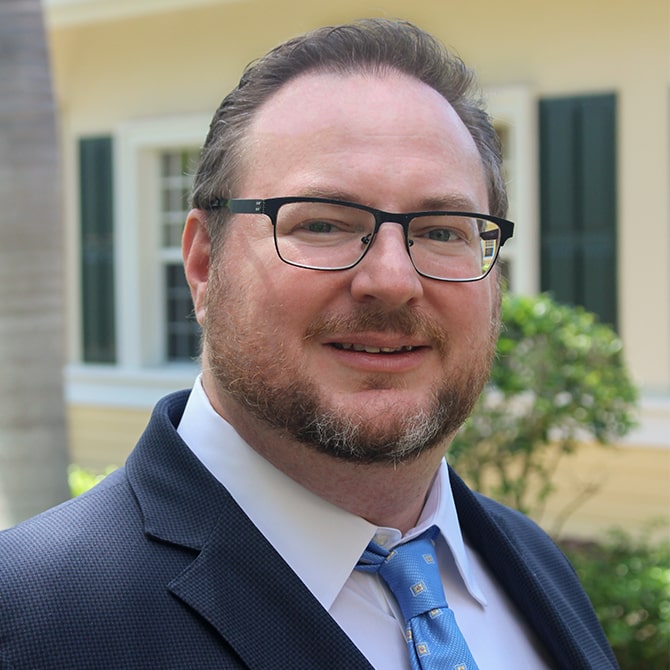
By Brandon Arkin, elder law attorney, Solkoff Legal, P.A. | {date}

By Brandon Arkin, elder law attorney, Solkoff Legal, P.A. | {date}
The short answer
In most cases, the nursing home bill belongs to your parent and is paid from your parent's income, savings, insurance, Medicare or Medicaid. Adult children in Florida generally don't owe it just because they are family. The risks usually come from two places: signing the admission contract the wrong way, and mishandling your parent's money if you are the agent under a power of attorney. The article on nursing home admission covers the admission process itself.
Does Florida make children pay for parents?
Some states have "filial responsibility" laws, which can require adult children to support a parent who can't pay. Florida doesn't have one. A Florida adult child isn't legally required to pay a parent's care costs just because they're the parent's child. If your parent lived or received care in another state, that state's law may be different, so it's worth asking.
A parent's other debts work in a similar way. They are generally paid from what your parent owns, during life or through the estate after death. Children don't usually inherit a parent's debts personally, unless they co-signed, guaranteed the debt or received property in a way the law treats differently. The article on what to do after a death explains how an estate pays bills.
The "responsible party" line in the admission papers
Admission packets often have a line for a "responsible party." Federal rules for nursing homes that take Medicare or Medicaid say the facility may not ask for or require a third-party guarantee of payment as a condition of admission or of staying (42 CFR 483.15(a)(3)). It may ask a representative who has legal access to the resident's income or resources to sign a contract to pay from the resident's money, without taking on personal financial liability.
The same rule says the facility may not ask your parent to waive the right to Medicare or Medicaid, or to promise not to apply for Medicaid.
In practice, how you sign matters. If you sign as your parent's agent, write "Jane Doe, as agent for Mary Doe" rather than just your name. Read every page, including any separate guarantee or arbitration agreement, and ask for a copy of everything. If a clause says you will pay personally, you can ask to strike it before signing.
Where the money usually comes from
Medicare may cover a short rehab stay in a skilled nursing facility after an inpatient hospital stay of at least three days in a row, up to 100 days per benefit period. In 2026 you pay nothing for days 1 to 20 and $217 a day for days 21 to 100 (Medicare.gov). Medicare does not pay for long-term custodial care.
After that, families usually pay privately, use long-term care insurance, or apply for Florida Medicaid. If your parent has a long-term care policy, call the insurer early. Many policies have a waiting period, often called an elimination period, before benefits start, and the insurer may need forms from the doctor and the facility. For 2026, Florida's nursing home Medicaid has an income cap of $2,982 a month and an asset limit of $2,000 for a single person (DCF Appendix A-9). Income above the cap may be handled with a Qualified Income Trust. If your parent qualifies, most of their income still goes to the nursing home each month as their "patient responsibility." They keep a $160 personal needs allowance. The Medicaid planning page and common Medicaid myths explain more. Florida generally doesn't backdate coverage for adults 21 and older, so applying promptly matters (AHCA).
If you manage your parent's money
If you're the agent under a power of attorney, you must act for your parent's benefit and keep records (Fla. Stat. 709.2114). That generally means using your parent's money to pay your parent's care bills. An agent who misuses the principal's money can be required to restore it (Fla. Stat. 709.2117). A hypothetical: a daughter in Atlanta who holds her father's power of attorney lets his Social Security pile up in his account while the nursing home bill goes unpaid. The facility may then ask why the money wasn't used for him. Paying the bill from his funds, on time, protects both of you. The guide for new power of attorney agents covers these duties.
After your parent dies: Medicaid estate recovery
When someone received Medicaid at 55 or older, Florida law creates a claim against their estate for what Medicaid paid (Fla. Stat. 409.9101). That claim is against the estate, not against you personally. The same statute says it isn't enforced while there's a surviving spouse, a child under 21, or a child who is blind or permanently disabled. It also can't be enforced against property that's exempt from creditors under Florida law, which can include protected homestead passing to family. Heirs may ask for a hardship waiver in some cases. The articles on probate in Florida and the Lady Bird deed explain how the home passes.
Ways to protect yourself
- Sign only in a representative capacity, and never as a guarantor.
- Keep your parent's money separate from yours.
- Apply for Medicaid early if your parent is likely to need it, and keep copies of everything you send.
- Keep a record of every payment you make from your parent's accounts.
- Talk with an elder law attorney before moving or giving away your parent's assets.
Before you sign the admission papers
Bring this list to the admissions office.
Ask for the full packet ahead of time so you can read it at home.
Find every line for "responsible party" or "guarantor," and every clause that says you will pay.
Sign as agent ("as agent for") or as representative, not in your own name alone.
Note any arbitration agreement, and ask whether signing it is optional.
Ask how the facility handles Medicaid-pending residents and who helps with the application.
Get a signed copy of everything before you leave.
A script you can use: "I'm signing as my mother's agent under her power of attorney, so I can pay her bills from her money. I'm not agreeing to pay personally. Could you show me where the contract says that, or strike the guarantee language?"
Can a Florida nursing home sue me for my parent's bill?
It depends mostly on what you signed and how you handled your parent's money. Federal rules say a facility that takes Medicare or Medicaid can't require a third-party guarantee as a condition of admission or of staying (42 CFR 483.15(a)(3)). But if you signed a personal guarantee, or used your parent's money for something other than their care while serving as agent, you could face a claim. Signing "as agent," keeping records and paying from your parent's funds lowers the risk. If you receive a demand letter, talk with an attorney.
Will Medicaid take my parent's house after they die?
Often it can't, but it depends on the facts. Florida's estate recovery law, Fla. Stat. 409.9101, creates a claim against the estate of someone who got Medicaid at 55 or older. The claim isn't enforced while there's a surviving spouse, a child under 21, or a blind or disabled child, and it can't be enforced against property that's exempt from creditors, which can include protected homestead. Whether the home is protected depends on how it's titled and who inherits it, so ask an elder law attorney.
What if Medicaid is still pending when the bill comes?
Tell the facility's business office right away that a Medicaid application is in process, and keep copies of everything you submitted. Federal rules generally require a decision within 45 days, or 90 days when disability is the basis (42 CFR 435.912). Keep paying your parent's share from your parent's income as you're able. If the application is denied, an elder law attorney can review whether to appeal or reapply.
If your family is facing one of these questions, you can reach Brandon Arkin at Solkoff Legal, P.A. at (561) 733-4242.
Talk through the next step
Bring your questions, a list of accounts and any papers a hospital, nursing home or Medicaid office has sent you. Call the Delray Beach office or request a consultation, and I can look at where things stand and what may come next. A phone call or an email does not by itself create an attorney-client relationship.
Solkoff Legal, P.A. · (561) 733-4242