For clergy, chaplains and faith leaders
Elder Care and Planning: A Florida Guide for Clergy and Faith Leaders
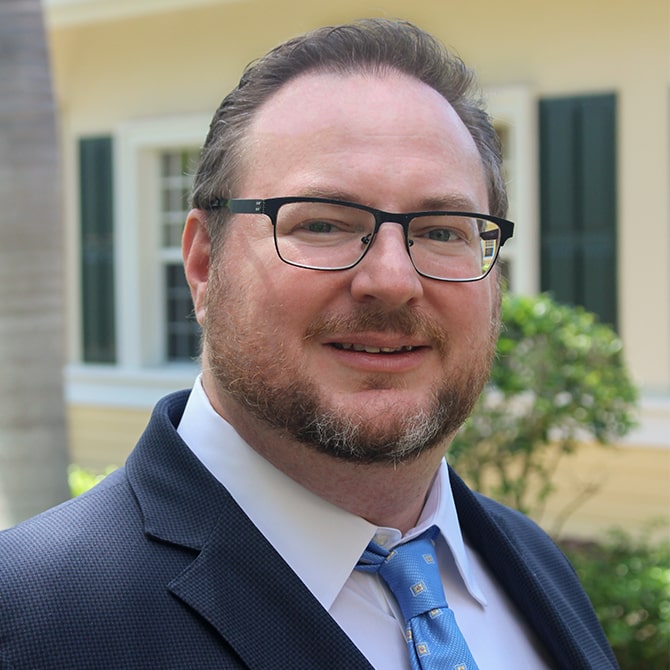
By Brandon Arkin, elder law attorney, Solkoff Legal, P.A. · Updated November 2026

By Brandon Arkin, elder law attorney, Solkoff Legal, P.A.
Updated November 2026
Families often tell their pastor, rabbi, imam or chaplain before they tell anyone else. A daughter mentions after services that her father got lost driving home. A widow asks for prayer because money is tight in a way it never was. You don't need to know the law to help. Knowing a little about how Florida handles dementia, exploitation, end-of-life decisions and care costs can help you hear what isn't being said, and point the family toward help while choices are still open.
Recognizing a family in a care or money crisis
Care crises rarely announce themselves. They show up as changes you notice because you see people week after week:
- A longtime member stops attending, or always arrives with a different relative.
- A spouse who used to be social seems exhausted, short-tempered or tearful.
- Someone mentions a fall or "rehab" and isn't sure what happens when it ends.
- Giving changes sharply, in either direction, for no clear reason.
- Out-of-state children call you for updates.
Money and care problems usually arrive together. Florida uses $10,645 a month as the average private-pay nursing home cost in 2026 (DCF Appendix A-9), and savings can drain within months. Many families don't know that Florida Medicaid rules may let a spouse at home keep the house and up to $162,660 in countable assets, or that planning can still help after care has started. Your role isn't to explain those rules. It's to notice the strain and suggest getting information before anyone sells the house, moves money or signs papers in a hurry.
Dementia and the signs of exploitation, including "new friends"
Memory loss creates two risks at once: the person can no longer manage their affairs well, and they become an easier target. Florida defines a "vulnerable adult" as a person 18 or older whose ability to care for or protect themselves is impaired by a disability, brain damage or the infirmities of aging. "Exploitation" includes a person in a position of trust using deception or intimidation to take a vulnerable adult's money or property, and anyone taking it who knows or should know the person can't consent. Misusing a power of attorney and moving money out of a joint account are listed examples (Fla. Stat. 415.102).
Exploiters are often not strangers. Watch for:
- A "new friend," romantic interest or helper who appears suddenly and starts speaking for the person.
- Isolation: the new companion screens calls and visits, or the person stops coming to services.
- Talk of changing a will, deed or beneficiary to favor someone new.
- Unusual gifts or "loans," sometimes including large offers to the congregation itself.
- Fear, secrecy or confusion about where the money went.
Florida law offers a civil remedy: an injunction for protection against exploitation of a vulnerable adult, which can freeze assets. The clerk may not charge an initial filing fee (Fla. Stat. 825.1035). Strong signs of exploitation also trigger the reporting duty described below.
End-of-life wishes: the Florida documents that carry them
Clergy are often in the room when a family must decide about treatment. Three Florida documents decide whose voice counts:
- Designation of health care surrogate. It names the person who can make medical decisions if the person can't. It's signed before two adult witnesses. The surrogate can't be one of them, and at least one must not be a spouse or blood relative (Fla. Stat. 765.202).
- Living will. It records wishes about life-prolonging procedures if the person has a terminal or end-stage condition or is in a persistent vegetative state. It also needs two witnesses, one of whom is not a spouse or blood relative (Fla. Stat. 765.302).
- Do Not Resuscitate Order (DNRO). This is a medical order on Florida's DH Form 1896, signed by the patient or their representative and by a physician, physician assistant or autonomous practice APRN. EMTs and paramedics are only required to honor it if it's on yellow paper (Fla. Stat. 401.45; Florida Department of Health).
A living will can reflect religious beliefs about nutrition, hydration or comfort care, and a congregant may want a surrogate who shares them. Without a surrogate, Florida picks a proxy from a priority list that starts with a guardian, a spouse and adult children (Fla. Stat. 765.401). That may not be who they'd have chosen.
A respectful way to suggest planning
You don't have to steer anyone to a lawyer, and you shouldn't give legal advice. A gentle suggestion is usually enough:
- Start with their worry, not documents: "What would help you sleep better about Mom's situation?"
- Make it normal: "Many families here put these papers in place long before they need them."
- Pair the spiritual and practical: "Let's pray about this, and have someone look at the paperwork."
- Offer choices, not one name, and include the free county helpline.
- If the aging person can still take part, include them rather than talking around them.
Timing matters. While a person with early memory loss can still understand and sign documents, the family usually has more options. Once capacity is gone, the path may lead to court.
Caregiver burnout and the supports in Palm Beach County
The caregiving spouse or adult child is often the one in crisis. Signs include skipping their own doctor visits, weight loss, irritability, guilt about "not doing enough," and "I can't do this anymore." Burnout raises the risk of caregiver illness and, in some homes, of neglect.
You can help by naming the strain, offering respite through congregation volunteers, and connecting the family to free local help. The Area Agency on Aging of Palm Beach/Treasure Coast is the county's Aging and Disability Resource Center. Its helpline connects older adults and caregivers with services and screening for Florida's long-term care waitlist (AAA Palm Beach/Treasure Coast). Alzheimer's Community Care, a nonprofit serving Palm Beach, Martin and St. Lucie counties, offers dementia day centers, Family Navigators for caregivers and a 24-hour assistance line (Alzheimer's Community Care).
Palm Beach County supports to share
| Resource | How to reach it |
|---|---|
| Area Agency on Aging of Palm Beach/Treasure Coast Helpline (weekdays 8 a.m. to 5 p.m.; English, Spanish and Creole) | 1-866-684-5885 (AAA PBTC) |
| Alzheimer's Community Care 24-Hour Assistance Line (non-medical urgent needs) | 800-394-1771 (Alzheimer's Community Care) |
| Alzheimer's Community Care headquarters, West Palm Beach | (561) 683-2700 (Alzheimer's Community Care) |
| Alzheimer's Association 24/7 Helpline | 800-272-3900 |
| Florida Elder Helpline, statewide | 1-800-963-5337 (1-800-96-ELDER) |
| Florida Abuse Hotline, 24 hours a day, or report online | 1-800-962-2873 (Florida DCF) |
| Medical emergency | 911 |
Your duty to report suspected abuse, and the clergy privilege
Florida requires "any person" who knows, or has reasonable cause to suspect, that a vulnerable adult has been or is being abused, neglected or exploited to report it immediately to the central abuse hotline (Fla. Stat. 415.1034). The statute names professions such as physicians, social workers, bank employees and a "practitioner who relies solely on spiritual means for healing," but the list isn't exclusive. Clergy aren't named, and they don't need to be. The duty applies to everyone.
A knowing and willful failure to report is a second-degree misdemeanor (Fla. Stat. 415.111). Reporters are presumed to act in good faith and are immune from liability unless bad faith is shown by clear and convincing evidence (Fla. Stat. 415.1036). The reporter's identity generally stays confidential (Fla. Stat. 415.107).
The clergy privilege protects a confidential communication made privately to a member of the clergy to seek spiritual counsel (Fla. Stat. 90.505). Chapter 415 sets aside most privileges in abuse cases, but it expressly keeps two: attorney-client and clergy-person communications (Fla. Stat. 415.1045(3)). In practice:
- What you see or hear outside confidential counseling, such as bruises on a home visit or a concern from another member, isn't covered by the privilege. The ordinary duty applies.
- How the privilege affects a specific disclosure made in confidential spiritual counseling is a legal question for your denomination's counsel or your own lawyer.
- Immediate danger means 911.
Reports about children fall under Florida's separate child-protection law.
Conversation starters
Openings, not scripts. Use your own words. Tick the ones to keep handy. Nothing is saved.
Questions clergy ask
Are clergy mandatory reporters of elder abuse in Florida?
Yes. Florida requires any person who knows or has reasonable cause to suspect that a vulnerable adult is being abused, neglected or exploited to report it immediately to the Florida Abuse Hotline at 1-800-962-2873 (Fla. Stat. 415.1034). Clergy aren't on the statute's list of named professions, but the list isn't exclusive. Chapter 415 does leave the clergy-person privilege for confidential spiritual counseling in place (Fla. Stat. 415.1045(3)). How it applies to a specific disclosure is a question for your own counsel.
What is the difference between a living will and a DNRO in Florida?
A living will is a legal document that records a person's wishes about life-prolonging procedures if they have a terminal or end-stage condition or are in a persistent vegetative state. It's signed before two witnesses (Fla. Stat. 765.302). A DNRO is a medical order on Florida's DH Form 1896, signed by the patient or their representative and a qualified health care provider. It tells EMTs and paramedics not to perform CPR, and it must be on yellow paper (Florida Department of Health). Many people have both.
What should I do if I think a "new friend" is taking advantage of a congregant?
If you have reasonable cause to suspect exploitation, report it to the Florida Abuse Hotline at 1-800-962-2873 or online. Florida law requires a report, and good-faith reporters are immune from liability (Fla. Stat. 415.1036). Stay connected with the person, because exploiters often isolate their targets, and don't confront the suspected exploiter yourself. Family members may want to ask an attorney about an injunction for protection against exploitation, which can freeze assets (Fla. Stat. 825.1035).
Solkoff Legal, P.A. does not pay referral fees or give anything of value for a recommendation (Rule 4-7.17(b)). Families choose their own lawyer, and their information is shared only with their consent.
If a congregant or their family is facing one of these questions, Brandon Arkin at Solkoff Legal, P.A. can be reached at (561) 733-4242.
Talk through the next step
Bring your questions, a list of accounts and any papers a hospital, nursing home or Medicaid office has sent you. Call the Delray Beach office or request a consultation, and I can look at where things stand and what may come next. A phone call or an email does not by itself create an attorney-client relationship.
Solkoff Legal, P.A. · (561) 733-4242